There isn’t one best palm-trimming season for every San Diego property. Schedule the work around the palm species, dead or damaged material, fruit and flower stalks, site exposure, and any pest symptoms. Winter isn’t automatically off-limits, and a calendar alone doesn’t tell you whether a palm needs pruning.
San Diego palm tree trimming also splits on ownership. A City-maintained street palm follows the City’s request process. A private-yard palm is a separate job for a licensed contractor after you confirm the tree is yours to maintain.
Branch Pro San Diego connects homeowners with licensed and insured independent local pros. We don’t trim palms ourselves. You hire and pay the matched professional directly.
Is this a City street palm or a private palm?
If the palm sits in the public right-of-way or is a City-maintained park tree, start with the City, not a private quote. The City’s street-tree maintenance page says city-maintained issues go through Get It Done. You may request a No-Fee Permit for trimming, removal, planting, or root pruning after City inspection.
The City’s Right of Way Management Division trims trees and palm trees for vehicle and pedestrian clearance as funding allows and upon request. The City also states that its quarterly palm trimming schedule runs from July 1 through June 30. That is the City’s own work calendar for street palms. It is not a rule that every private queen palm or date palm must be trimmed in those months.
A private palm in a backyard still needs a species-and-condition plan. Use Get It Done only when the City actually maintains the tree.
Start with the reason for trimming
A useful palm-trimming plan begins with a specific task. That might include:
- Removing dead or dying fronds that could fall
- Managing fruit or flower stalks over a walkway or patio
- Clearing dry material where the property’s fire authority requires it
- Correcting an obstructed access area without stripping the crown
- Assessing discoloration, crown decline, or other possible pest symptoms
The ISA palm-care guide recommends retaining healthy foliage and protecting the terminal bud. Overpruning removes working foliage and can slow growth. Climbing spikes also leave permanent wounds in a palm trunk.
Frond removal and fruit-stalk removal are separate decisions. A palm may need one without the other. UF/IFAS guidance also explains that flower stalks don’t have to finish fruiting before removal when fruit is unwanted.
How should queen palms be trimmed?
Queen palms aren’t self-cleaning. Old fronds can remain attached and may need removal after they die.
Partly green fronds deserve a closer look. They can still contribute nutrients to the palm, so yellowing alone isn’t a reason to strip the crown. The UF/IFAS queen palm guide recommends removing dead leaves while preserving foliage that remains useful to the tree.
Fruit clusters are a separate maintenance choice. Removal may make sense over a driveway, pool deck, or pedestrian area. The need depends on the site and the owner’s goal, not a fixed month.
What changes for Mexican fan palms?
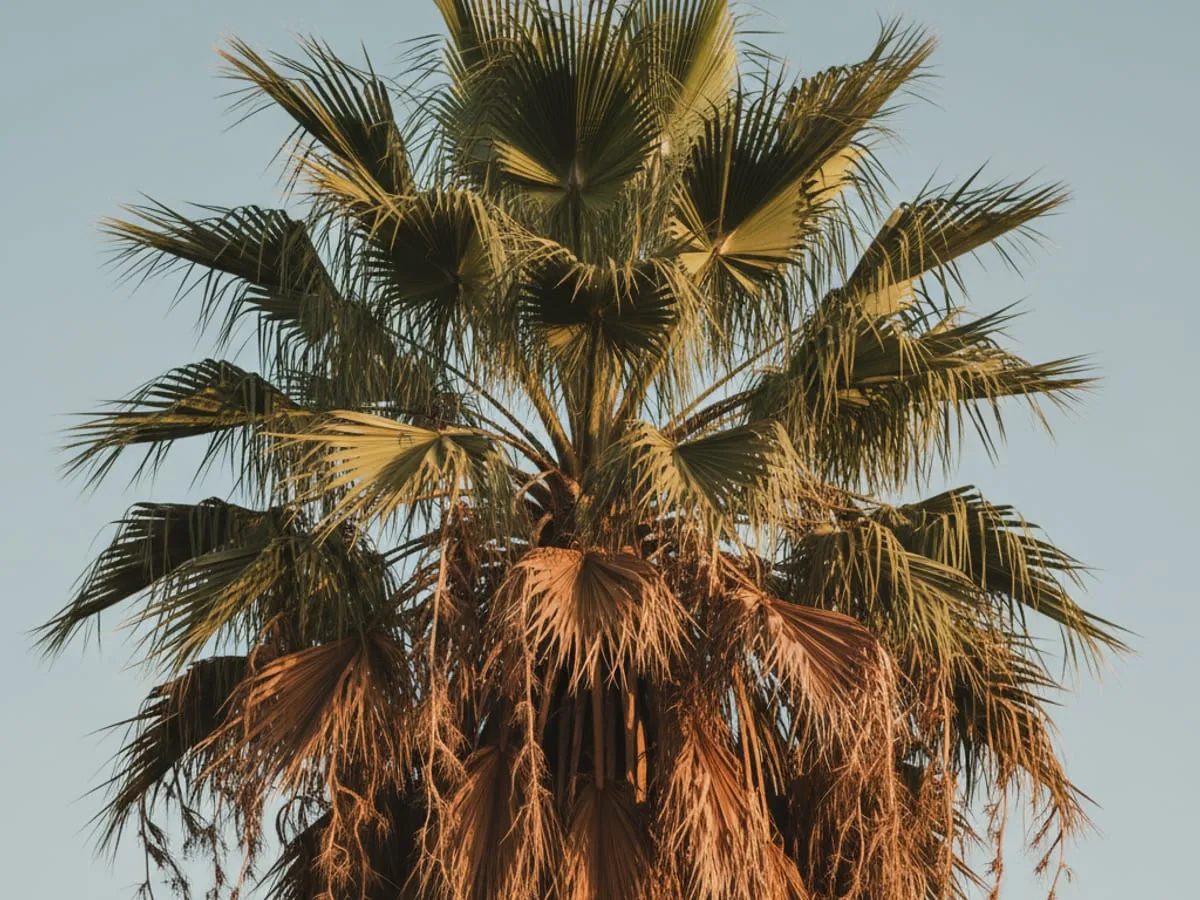
Mexican fan palms can retain dead fronds below the green crown. The amount of attached material, its position, and what lies below should guide the work.
A palm near a structure in inland San Diego County presents a different decision from one standing in an open area near the coast. Check the property’s current fire authority before treating any statewide zone description as the rule for that address.
The California Board of Forestry describes Zone 1 as the area from 5 to 30 feet from a structure and Zone 2 as 30 to 100 feet, limited by a nearer property line. Its current defensible-space page should be read alongside local requirements. Don’t treat vegetation removal as a guarantee against fire damage.
How should date palms be approached?
Date palms have rigid fronds and separate fruit or flower structures. The condition of the crown, falling-material exposure, and the intended result should be discussed before cutting begins.
Canary Island date palms also require attention to possible South American palm weevil symptoms. UC IPM says the pest is established in San Diego County and can severely damage these palms. Possible signs include declining or asymmetric crown growth, damaged new leaves, and visible crown injury. Severe damage may lead to crown failure.
Those signs aren’t a reliable do-it-yourself diagnosis. Other problems can resemble pest damage. Use a qualified assessment before choosing treatment, removal, or material-handling steps. Suspected South American palm weevil findings should be reported to the San Diego County agricultural commissioner using the direction in UC IPM’s giant palm weevil guidance.
Winter shouldn’t be treated as a pest-free window. San Diego monitoring published by UC Riverside in 2018 found adult activity throughout the year, including winter. That historical finding supports condition-based planning, not a fixed treatment calendar or a current infestation map.
Why a hurricane cut is the wrong goal
A hurricane cut removes most of the green crown and leaves a narrow tuft near the top. That isn’t the same as removing dead fronds or making limited clearance cuts.
The ISA palm guide advises retaining healthy foliage. Excessive removal reduces photosynthetic area, can slow growth, and may attract pests. A qualified pro should decide which fronds serve a clear pruning purpose while protecting the terminal bud.
Don’t use a clock-face rule as an automatic cutting line. Species, condition, clearance needs, and partly living foliage all matter. A neat-looking crown isn’t evidence that the pruning was appropriate.
Is there a best month for palm trimming?
No single month fits every palm. UF/IFAS palm-pruning guidance says there is no inherently best season. Dead leaves, fruit or flower stalks, cold damage, retained foliage, and palm condition each affect timing.
This produces a more useful schedule:
- Address a hanging or broken frond based on the immediate site risk.
- Plan fruit or flower removal around the site’s needs.
- Retain healthy and partly living foliage unless there is a clear reason to remove it.
- Investigate crown decline before routine pruning hides useful symptoms.
- Check fire, utility, city, and HOA requirements for the actual property.
A queen palm beside a Chula Vista patio may need fruit management. A Mexican fan palm near an inland structure may need dry-material review. A Canary Island date palm with crown decline needs diagnosis before anyone treats it as a routine cleanup.
What should you ask before accepting a quote?
Ask each provider to describe the same scope in writing. Useful questions include:
- Which fronds are dead, dying, partly living, or healthy?
- Are fruit or flower stalks included?
- How will the terminal bud and trunk be protected?
- Will climbing spikes touch a living palm?
- Does the crown show symptoms that need diagnosis first?
- What material will remain onsite, and what will be removed?
- Does access require climbing, a lift, or traffic control?
- Are utility, city, or HOA approvals relevant to this location?
The quote should separate pruning from pest treatment or removal. It should also identify each palm, especially when several species share the property.
Price depends on the actual scope, access, palm condition, equipment plan, and debris handling. Compare written scopes instead of assuming every provider included the same work.
Can you trim a palm yourself?
Ground-level cleanup is different from cutting overhead. Don’t climb a palm, work from an unstable ladder, or use powered cutting tools above you. Keep clear of electrical conductors and contact the utility when a palm involves its lines.
Date-palm thorns, falling fronds, heavy fruit clusters, and concealed crown damage can change the risk quickly. Work requiring climbing, rigging, or powered equipment belongs with a qualified professional.
Frequently asked questions
Do San Diego palms need yearly trimming?
Not automatically. Inspect the species, crown condition, attached dead material, fruit or flower stalks, and site exposure. Schedule work when there is a defined pruning purpose.
Should palm flower stalks remain until fruit forms?
No universal rule requires that. Flower or fruit stalks can be considered separately from fronds. Their removal depends on the palm, the site, and the maintenance goal.
Should every yellow palm frond be removed?
No. Partly living foliage may still support the palm. Identify why the frond is discolored before removing useful parts of the crown.
Is winter safe from South American palm weevils?
Don’t assume so. Published San Diego monitoring found adult activity during winter as well as other seasons. Suspected symptoms need qualified identification and current local guidance.
Do dry palm fronds always violate fire rules?
Requirements depend on the property’s jurisdiction, distance from structures, and current fire-authority rules. Confirm the address and applicable requirements before scheduling the scope.
For palm tree trimming in San Diego County, call (858) 400-4423. Branch Pro San Diego will connect you with a licensed and insured independent local pro. You contract with and pay the professional directly.
Our palm tree service covers pruning and cleanup questions. A dead or structurally compromised palm may need tree removal instead. If the concern is species identification or crown decline, begin with an arborist consultation.
If you aren’t sure which palm is in your yard, queen palm versus king palm explains visible differences. Property managers can also review our commercial tree service guide before comparing scopes.